Saint Conrad
Confalonieri
Knight, penitent, hermit. For almost seven centuries Noto has called on him as father and protector.
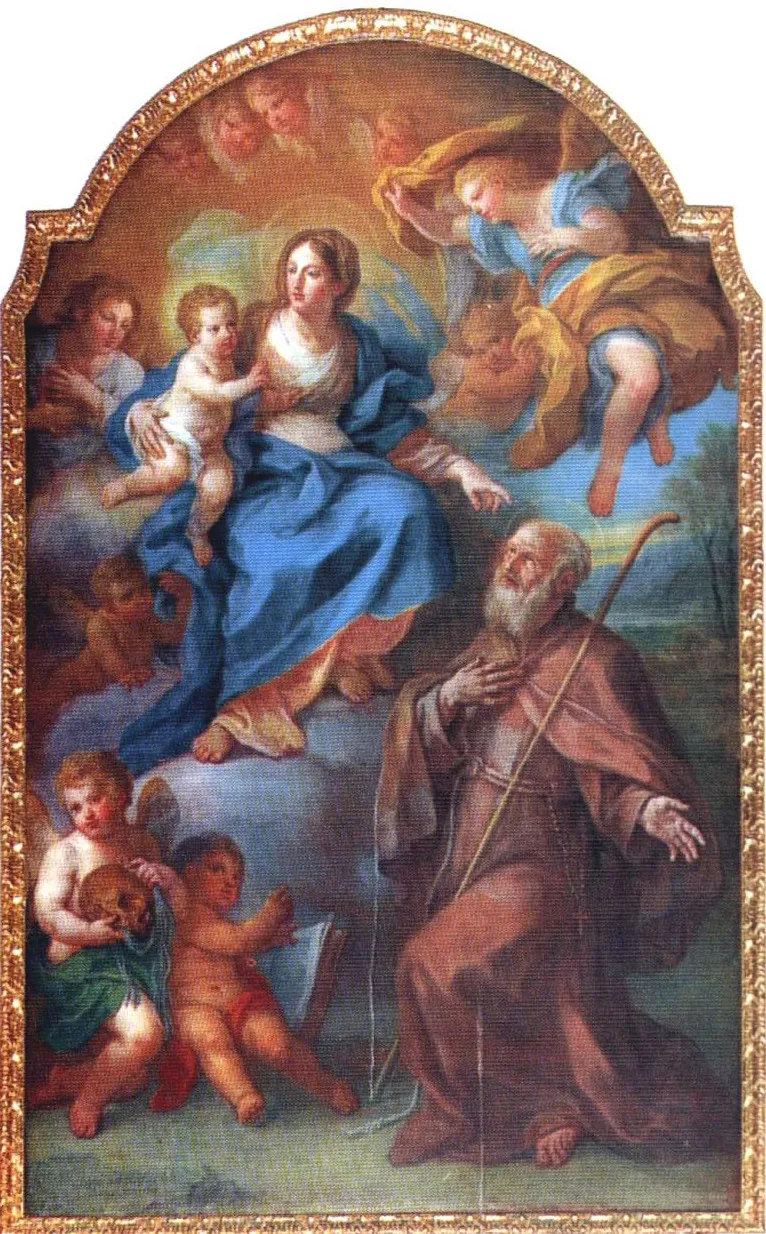
Photo: unknown author · Public domain · Wikimedia Commons
From knight to penitent
Conrad was born in 1290 in Calendasco, near Piacenza, into the noble Confalonieri family. A young married knight, he lived as his rank required, among estates, arms and hunting parties.
During a hunt he had the undergrowth set on fire to drive out the game; the wind spread the blaze to woods, fields and houses. A poor peasant was accused of the damage and sentenced to death. Conrad could not bear the guilt: he went before the lord of Piacenza, confessed that he was responsible, saved the innocent man and paid for the damage with his own property.
From that ordeal a new life was born. With the agreement of his wife, who joined the Poor Clares, Conrad took the habit of a Franciscan tertiary and chose poverty and prayer.
A pilgrim all the way to Noto
Around 1315 he left Piacenza and all his possessions. As a pilgrim he crossed Italy, prayed at the tombs of the Apostles in Rome and travelled south as far as Sicily.
He reached Noto around 1340 and was welcomed by Guglielmo Buccheri, also a hermit, at the hermitage of the Celle. When too many people came seeking his prayers and advice, Conrad chose a deeper solitude: a cave in the Pizzoni valley, just outside the town, where he lived in prayer, fasting and penance until his death.
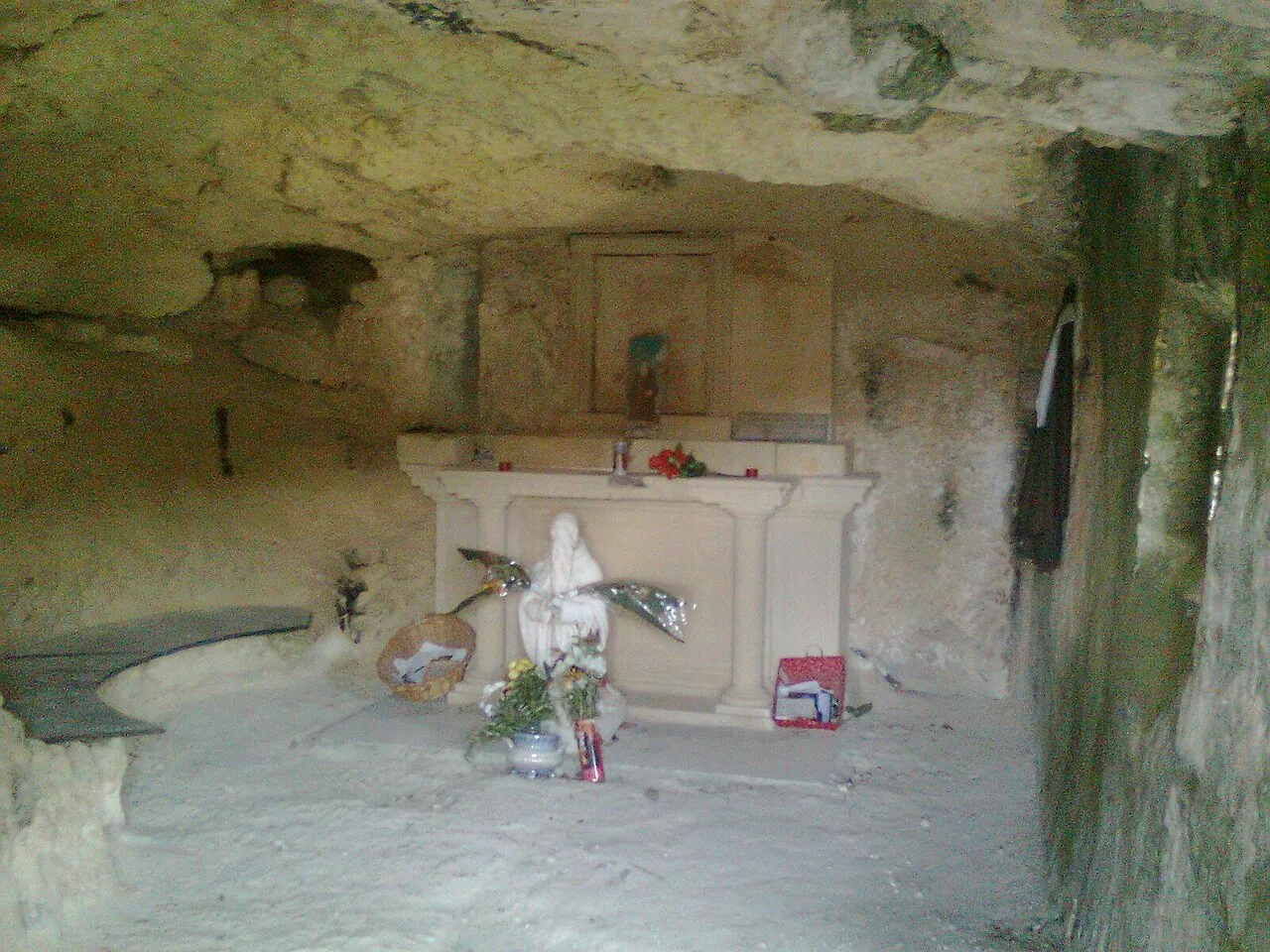
Photo: Sepp.P · CC BY-SA 3.0 · Wikimedia Commons
Bread, healing, light
Noto's tradition preserves the memory of wonders attributed to Conrad's prayer during his lifetime.
Warm bread in the famine
During the great famine of 1348–1349, whoever climbed to the cave to ask for help went home with a warm loaf. It is said that the Bishop of Syracuse himself, visiting the hermit, received fragrant bread from him where there was nothing to live on.
Comfort for the sick
Tradition tells that at his prayer the nobleman Antonio Sessa and the son of a tailor from Noto, both suffering from a hernia, were healed. This is why Saint Conrad is invoked by the sick; the ex-votos offered at his hermitage tell of graces asked for and received over the centuries.
19 February 1351
Conrad died in his cave, kneeling, his eyes raised to heaven. According to the account, a light filled the cave and his body remained in prayer even after death. As he had asked, he was buried in the church of San Nicolò.
Patron Saint of Noto
Conrad's reputation for holiness was immediate: his cause opened right after his death and, after several interruptions, ended when Pope Leo X approved his cult in 1515. In 1625 Pope Urban VIII granted the Franciscan Orders a proper Office and Mass.
The Saint's body is venerated in Noto Cathedral, kept in the silver Ark. Saint Conrad is patron of Noto and of his birthplace, Calendasco: a bond between the two communities renewed every year around 19 February.
approves the cult
The Church recognises a devotion that began right after his death.
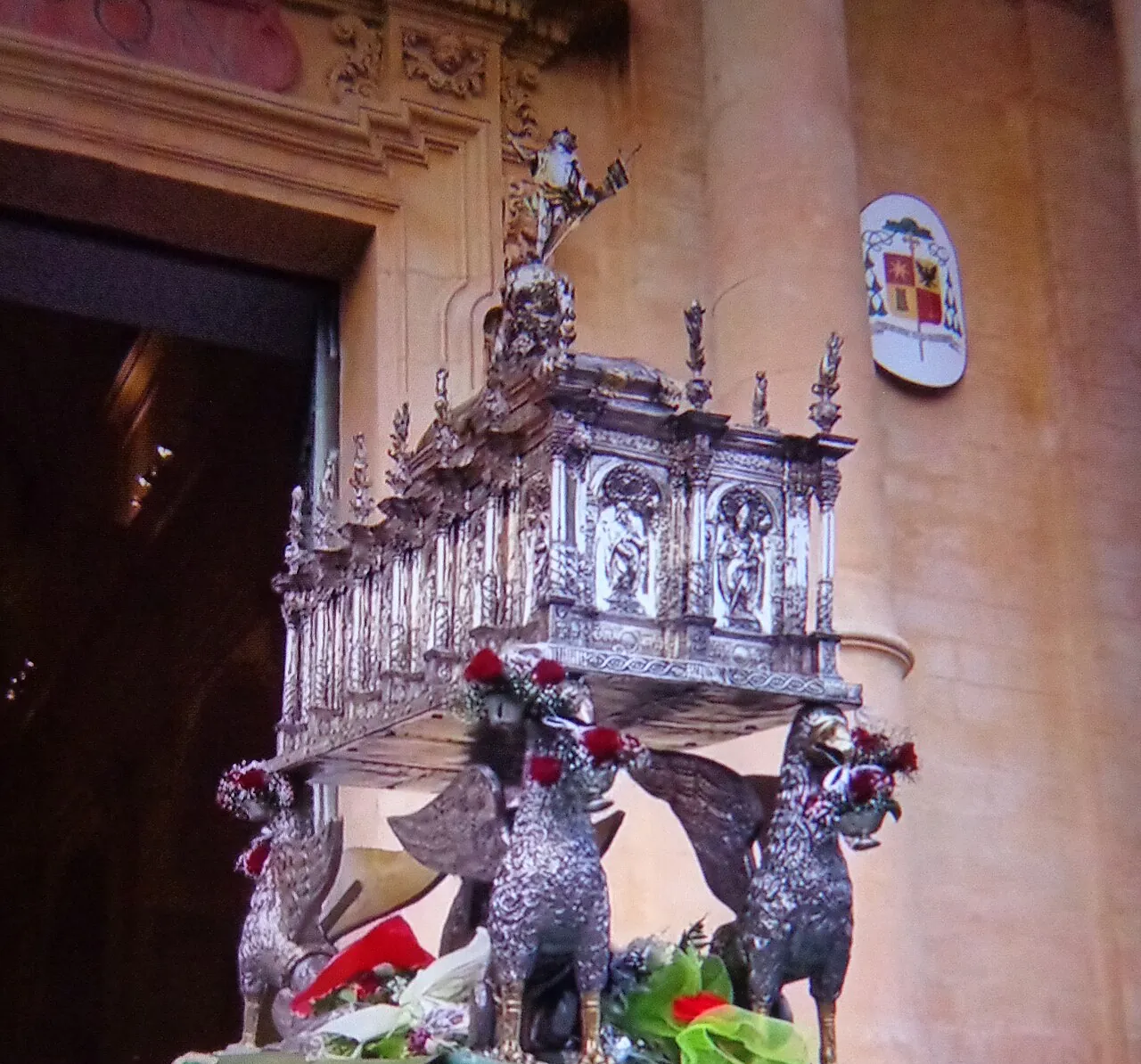
Photo: Effems · CC0 · Wikimedia Commons
A treasure carried on shoulders
The silver Ark holding the Saint's body is the heart of the processions. The bearers carry it through the town's Baroque streets, accompanied by the cilii, the great votive candles offered by the faithful.
19 February — the liturgical feast, on the anniversary of his death: solemn liturgy and procession of the Ark.
Last Sunday of August — the summer feast, recalling the Saint's arrival and the first procession; the following Sunday the octave is celebrated.
Many devotees make the viaggio scausu: the barefoot pilgrimage to fulfil a vow.
In the hermit's footsteps
In the Pizzoni valley, just outside Noto, the Hermitage of Saint Conrad outside the walls preserves the cave where the Saint lived in prayer. Next to it, a small museum holds the ex-votos, signs of graces received.
In the Cathedral his relics are venerated in the silver Ark: before its Patron the town still entrusts its hopes.
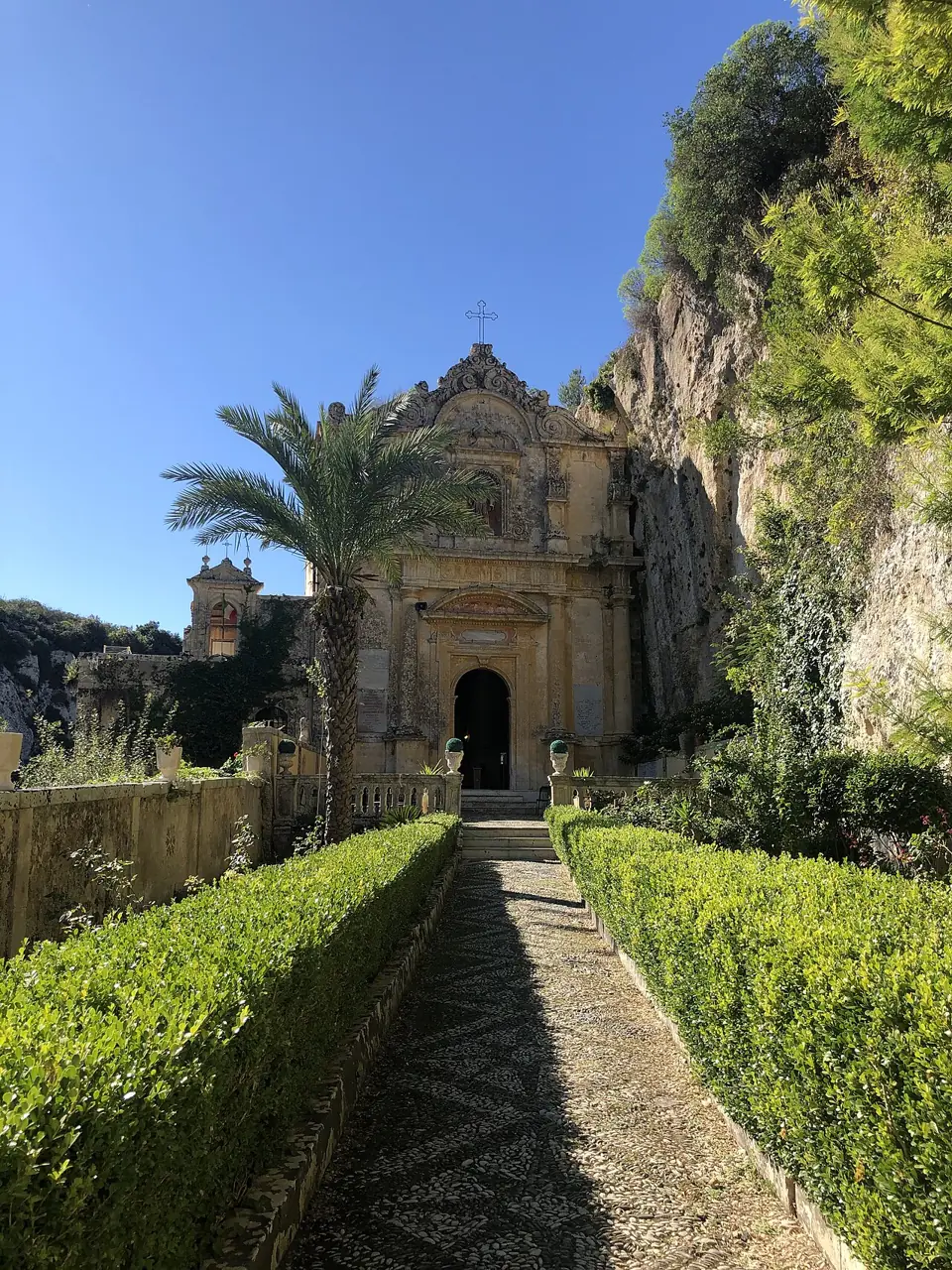
Photo: Davide Mauro · CC BY-SA 4.0 · Wikimedia Commons
Come and pray to the Patron Saint
Saint Conrad rests in Noto Cathedral. Join the celebrations and feasts in his honour.
Image sources
The photographs come from Wikimedia Commons and are published under free licences; they have been resized and stripped of technical metadata. The account of the Saint's life follows the hagiographic tradition and the historical studies devoted to him.
- Saint Conrad in a painting with the Virgin and Child — Photo: unknown author · Public domain · Wikimedia Commons
- Saint Conrad's cave — Photo: Sepp.P · CC BY-SA 3.0 · Wikimedia Commons
- The silver Ark of Saint Conrad in procession — Photo: Effems · CC0 · Wikimedia Commons
- The Hermitage of Saint Conrad outside the walls — Photo: Davide Mauro · CC BY-SA 4.0 · Wikimedia Commons